
What is Vegan Okonomiyaki?
Okonomiyaki (お好み焼き) is a savory Japanese pancake that’s typically made with cabbage, meat or seafood and held together with an egg-based batter. With a few substitutions, it’s easy to make Okonomiyaki plant-based, and I actually prefer the texture of eggless Okonomiyaki.
- What is Vegan Okonomiyaki?
- How to Make Okonomiyaki Vegan
- What goes into a traditional Osaka-style Okonomiyaki?
- How to serve Okonomiyaki
- 📖 Recipe
- FAQ
- Comments
How to Make Okonomiyaki Vegan
There are three non-vegan components of typical Okonomiyaki. The first is the egg in the batter. The egg is primarily used to bind the ingredients together along with the flour. The second ingredient is the pork belly, which is laid on top of the pancake before flipping it over. The meat serves to add flavor and as well as fat, which helps the Okonomiyaki to brown. The third ingredient is katsuobushi, which is dried, smoked and fermented skip-jack tuna, which is shaved into thin flakes and used as a topping to boost the umami taste of the pancake. The easiest to replace is the pork, which can be substituted with any plant-based product that is capable of adding flavor to your Okonomiyaki. I’ve used shiitake mushrooms, which not only pack a flavor punch, they also have a nice meaty texture. Other mushrooms or plant-based ham or sausage will work as well. The katsuobushi can be replaced with any powder that’s packed with umami. I like to shave dried shiitake mushrooms on top with a microplane. This produces little flakes that not only look like katsuobushi, but they’re also packed with naturally occurring glutamates and guanylates which stimulate the umami taste receptors in your mouth. Finally, the egg substitute is where it gets a little complicated. Eggs not only act as a source of liquid for binding the ingredients together in conjunction with the flour; they also have a viscous consistency that is very good at trapping air bubbles. When the mixture is heated, these air bubbles expand, and when the mixture reaches a specific temperature, the eggs gel, trapping the bubbles permanently. Which creates a fluffy texture. Typical plant-based solutions like flax meal or chia meal replicate the gooey texture of eggs, but they don’t gel when heated. This is where yamaimo comes in to save the day.
What goes into a traditional Osaka-style Okonomiyaki?
As the name implies, there is a great deal of flexibility in what you can add to Okonomiyaki, but a very basic Kansai-style Okonomiyaki typically includes a batter, cabbage, pork belly, scallions, and benishoga (pickled red ginger). From there, people customize it to suit their own tastes adding everything from other vegetables to seafood, to cheese, to mochi. Some ideas of things I like to add to vegan Okonomiyaki include red cabbage, avocado, maitake mushrooms, shredded carrots, bean sprouts, edamame, and fried tofu.
How to serve Okonomiyaki

In a restaurant, Okonomiyaki is typically prepared and eaten straight off of a tabletop griddle. Since this isn’t particularly practical at home, I usually cook it on the stove on a griddle and then keep them covered in aluminum foil in the oven to keep them warm.
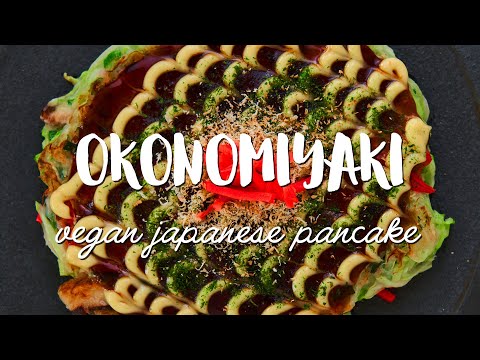
Topping the Okonomiyaki is another area to exercise your creativity. Traditionally Okonomiyaki is covered in a thick layer of Okonomiyaki sauce before being drizzled with mayonnaise, sprinkled with aonori (green nori flakes), and then topped with katsuobushi. But since this dish is all about customization, I often make the toppings match what I mixed into the Okonomiyaki. For instance, if I mix in plant-based chorizo, jalapenos, and cilantro into the pancake, I might top it with guacamole and pico de gallo. Okonomiyaki filled with “pulled pork” jackfruit might get topped with barbecue sauce and plant-based mayo (which makes the cabbage inside taste like coleslaw). The sky’s the limit here in terms of creativity, so have fun making your Okonomiyaki!
📖 Recipe

Equipment
Units
Ingredients1x2x3x
- 160 grams cabbage
- 180 grams yamaimo (3-4 inch piece)
- 40 grams fresh shiitake mushrooms (2 large mushrooms, thinly sliced)
- 20 grams scallions (2-3 scallions, chopped)
- 30 grams all-purpose flour (~¼ cup)
- ¼ teaspoon salt
- 16 grams benishoga (optional)
- 2 tablespoons vegetable oil
Condiments:
- Okonomiyaki sauce
- Vegan mayonnaise
- 1 dried shiitake mushroom
- Aonori
Instructions
- Stack the 160 grams cabbage leaves and then roll them together. Use a sharp knife to shred the cabbage into thin strands.
- Peel the 180 grams yamaimo and then grate it. You can also chop it up and add it to a food processor or blender to puree it.
- Add the cabbage, 40 grams fresh shiitake mushrooms , and 20 grams scallions to a large bowl and then toss them together with the 30 grams all-purpose flour and ¼ teaspoon salt until evenly coated.
- Add the grated yamaimo and 16 grams benishoga and mix this together well until it forms a batter.
- Heat a griddle or heavy-bottomed frying pan over medium heat until hot. Add 1 tablespoon of the 2 tablespoons vegetable oil and spread it around.
- Add half of the batter to the pan and use a spatula to give it form it into a round pancake that’s about ¾-inch thick. Be sure the okonomiyaki is an even thickness and is making good contact with the pan.
- Cover the okonomiyaki with a lid, turn down the heat, and let it steam for 2-3 minutes.
- When the okonomiyaki is partially cooked on top and golden brown on the bottom, flip it over. Cover it back up with the lid and let it steam for another 2-3 minutes.
- When the okonomiyaki is done, plate it and then top it with the Okonomiyaki sauce , Vegan mayonnaise , grated 1 dried shiitake mushroom , and Aonori as shown in the photos and videos above.
Nutrition Facts
Okonomi (お好み) means “preference” or “personal taste” while yaki (焼き) can mean grilled, griddled, or fried, so Okonomiyaki basically means “cooked as you like it.” This makes it easy to make vegan okonomiyaki, since you can literally add anything you like, or conversely, leave out anything you don’t.
Yamaimo (ヤマノイモ) literally means “mountain potato,” and it’s a member of the yam family which grows a long tuber with whiskers that has tan skin and white flesh. The unique thing about yamaimo is that it has a thick mucilaginous texture when grated raw, which is very similar to raw egg. When heated, the starch in the yam gels, giving it the ability to trap some air as well. This is what makes it such a good egg substitute. Traditional okonomiyaki recipes usually call for both yamaimo and egg, but yamaimo is perfectly capable of binding the pancake together without the help of egg. The texture does end up a little more dense and moist, but I actually prefer this as it becomes similar to takoyaki.
Like any pancake, you don’t want to form a lot of gluten in Okonomiyaki; otherwise, it will become dense and chewy. That’s why almost any gluten-free flour substitute containing a sufficient amount of starch will work. Gluten-free all-purpose flour mixes, rice flour, and chickpea flour will all work. Starches such as potato starch will work as well, though I find the Okonomiyaki tends to end up a bit gummy. I don’t recommend using flours that don’t contain much starch, such as coconut flour, and nut flours.
Hiroshima and Kansai (Osaka) are two regions of Japan that each has a unique style of making Okonomiyaki. In Hiroshima, batter, cabbage, pork, seafood, and yakisoba are stacked on a griddle, which creates layers within the pancake. In Kansai, everything is mixed together before being poured onto the griddle, and the ingredients typically don’t include noodles. This recipe is for a Kansai-style (Osaka-style) Okonomiyaki?
How the cabbage is cut is mostly a matter of personal preference. Shredding the cabbage creates long, thin strands that tend to hold the pancake together better while giving it a more crisp texture. Chopping the cabbage makes it fall apart more easily, but the larger pieces of cabbage tend to be more crunchy.

Vegan Okonomiyaki
Equipment
- daikon grater
- Large Glass Bowl
- 10-inch Non-stick Frying Pan
- 10-inch glass lid
- Cooking Chopsticks
- Turner (Spatula)
Ingredients
- 160 grams cabbage
- 180 grams yamaimo (3-4 inch piece)
- 40 grams fresh shiitake mushrooms (2 large mushrooms, thinly sliced)
- 20 grams scallions (2-3 scallions, chopped)
- 30 grams all-purpose flour (~¼ cup)
- ¼ teaspoon salt
- 16 grams benishoga (optional)
- 2 tablespoons vegetable oil
Condiments:
- Okonomiyaki sauce
- Vegan mayonnaise
- 1 dried shiitake mushroom
- Aonori
Instructions
- Stack the 160 grams cabbage leaves and then roll them together. Use a sharp knife to shred the cabbage into thin strands. 160 grams cabbage
- Peel the 180 grams yamaimo and then grate it. You can also chop it up and add it to a food processor or blender to puree it. 180 grams yamaimo
- Add the cabbage, 40 grams fresh shiitake mushrooms , and 20 grams scallions to a large bowl and then toss them together with the 30 grams all-purpose flour and ¼ teaspoon salt until evenly coated. 40 grams fresh shiitake mushrooms, 20 grams scallions, 30 grams all-purpose flour, ¼ teaspoon salt
- Add the grated yamaimo and 16 grams benishoga and mix this together well until it forms a batter. 16 grams benishoga
- Heat a griddle or heavy-bottomed frying pan over medium heat until hot. Add 1 tablespoon of the 2 tablespoons vegetable oil and spread it around. 2 tablespoons vegetable oil
- Add half of the batter to the pan and use a spatula to give it form it into a round pancake that’s about ¾-inch thick. Be sure the okonomiyaki is an even thickness and is making good contact with the pan.
- Cover the okonomiyaki with a lid, turn down the heat, and let it steam for 2-3 minutes.
- When the okonomiyaki is partially cooked on top and golden brown on the bottom, flip it over. Cover it back up with the lid and let it steam for another 2-3 minutes.
- When the okonomiyaki is done, plate it and then top it with the Okonomiyaki sauce , Vegan mayonnaise , grated 1 dried shiitake mushroom , and Aonori as shown in the photos and videos above. Okonomiyaki sauce, Vegan mayonnaise, 1 dried shiitake mushroom, Aonori
