
Mitarashi Dango (みたらし団子)
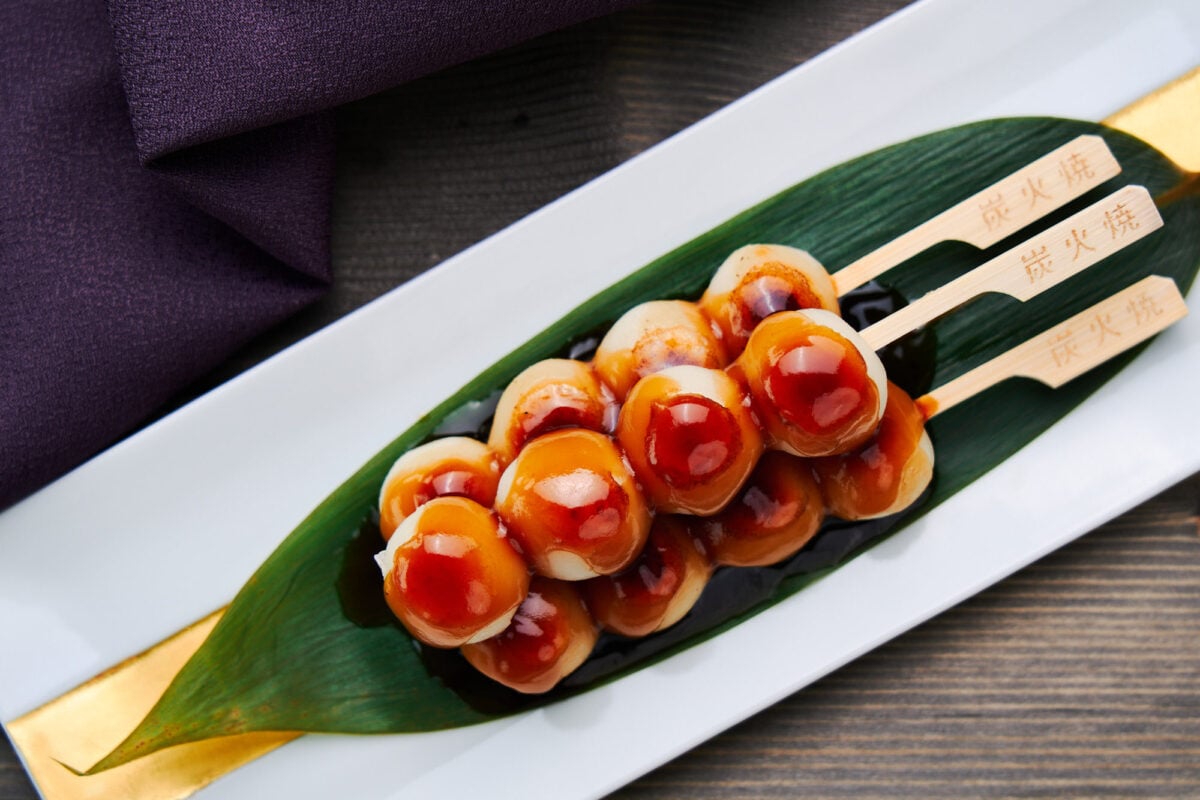
Mitarashi Dango is a classic Japanese snack and street food made by skewering rice dumplings and grilling them before glazing them in a thick sweet soy glaze. Recent appearances in popular anime like Demon Slayer (Kimetsu no Yaiba) have reignited interest in this traditional snack, so I visited the tea shop in Kyoto that’s credited with creating it to taste the original.
Back in my kitchen, I tested about a dozen iterations, including different blends of rice flour, different grilling methods, and different ratios of sauce ingredients. After all my experimentation, this is my favorite way of preparing Mitarashi Dango at home.
- Mitarashi Dango (みたらし団子)
- Why My Recipe Works
- Ingredients for Mitarashi Dango
- How to Make Mitarashi Dango
- How to Grill Mitarashi Dango
- How to Glaze
- Storage & Reheating
- Troubleshooting
- Serve this With
- 📖 Recipe
- FAQ
- Comments
Why My Recipe Works
- Use 100% shiratamako - Making this dango recipe with shiratamako (wet-milled glutinous short-grain rice flour) gives them the best soft yet springy texture (see the ingredient list for a more detailed explanation).
- Sear in pan - Grilling the Mitarashi Dango on a ripping hot cast iron skillet lends a nice toasty flavor to the dumplings while making this easy to make at home.
- Blend of sugars - Using a blend of invert sugar and brown sugar to sweeten the Mitarashi Dango Sauce provides an earthy flavor while giving it a lip-gloss shine.
Ingredients for Mitarashi Dango
- Glutinous rice flour - There are two major categories of Japanese rice . Short-grain rice (粳米 - uruchimai ) and glutinous short-grain rice (もち米 - mochigome ). Rice flour milled from short-grain rice is called joushinko flour(上新粉), and rice flour milled from glutinous short-grain rice falls into two categories shiratamako flour (白玉粉) and mochiko flour (餅粉). Shiratamako is made with a wet‑milling method that produces quick‑dissolving granules and a smoother, elastic dough. Mochiko is dry‑milled and forms a finer powder with a slightly different chew. For this Mitarashi Dango recipe, you want to use shiratamako. Due to the high price of glutinous rice in the past, some recipes call for a blend of joushinko and shiratamako (sometimes called dangoko ); however, there is no longer a huge price difference, and I prefer the chewy texture of dango prepared with 100% shiratamako. You should be able to find it in Japanese supermarkets or online.
- Salt - I like to season my dango with a bit of salt to help bring out the umami of the rice and meld the taste of the dango with the sweet and savory sauce.
- Mirin - Real mirin is brewed from whole grain glutinous rice, which lends a ton of amino acids that add umami to the sauce. Unfortunately, most mirin is fake and made with alcohol, corn syrup, and flavor enhancers. If you can’t find real mirin, I recommend substituting a 50:50 mixture of sake and sugar.
- Invert sugar - I like adding an invert sugar such as rice syrup (maltose), corn syrup, or honey because it adds extra shine to the sauce.
- Unrefined sugar - This not only adds sweetness to the sauce, but it also adds an earthy caramel flavor. Any finely ground brown sugar such as kokutou, Demerara, or Muscovado will work.
- Soy sauce - I like using a high-quality soy sauce like this one , but any dark Japanese-style soy sauce such as Kikkoman will work.
- Starch - The starch thickens the sauce. I recommend using either kudzu starch or potato starch. These both form a more translucent gel than cornstarch, and they don’t get gummy as they chill.
How to Make Mitarashi Dango
Set a large pot of water on the stove and turn the heat on to bring it to a boil. Soak some bamboo skewers in water to hydrate them. This will keep them from scorching while making the dumplings easier to skewer.
Add the shiratamako and salt to a large bowl and whisk them together. Next, pour the water over the flour and whisk it to evenly hydrate the flour. I usually do this with chopsticks because the small surface area of the sticks prevents the dough from sticking to them.
Once you have evenly-hydrated crumbles in your bowl, use your hand to knead the dango dough into a smooth, even mass. In Japan they say the texture should be like your earlobe. You may need to make minor adjustments in the amount of water or rice flour due to differences in the moisture content of the rice flour and the temperature and humidity of the room you are making the dango in. If the dough is too sticky, add a bit more shiratamako. If the dough is too crumbly and doesn’t form a solid mass after a few minutes of kneading, add a teaspoon of water and knead it in. Repeat if necessary.
To portion and shape the dango, I recommend using a scale. Each ball should be about 9.5 grams or ⅓ of an ounce. The other option is to roll the dough into a rope and divide it into 16 pieces. Then you can roll the dough into spheres between the palms of your hands.
Once the water is boiling, carefully roll the dango balls into the water and cook undisturbed for a minute. Once the outer surface of the dumplings has set, stir them to ensure they’re not sticking to the pot. Let these cook until they rise to the surface (a total of 3-4 minutes).
When the dumplings are all floating, set a timer for 2 minutes. Once the timer is up, use a slotted spoon to transfer the dango into a bowl of cold water (don’t use ice water) to chill them and drain the dango.
Pierce the center of each dumping with a skewer and thread 4 dumplings onto each stick.

How to Grill Mitarashi Dango
After the dango have been boiled and skewered, the next step is to brown them, and there are a couple ways to do this.
Traditional Way
The traditional way of browning Mitarashi Dango is to grill them over a shichirin (七輪). This is a Japanese-style ceramic grill heated using binchoutan (備長炭), special hardwood charcoal that emits very little smoke. The skewers of dango are placed on a mesh metal grill until they’re lightly charred on one side and then flipped to grill the other side.
Modern Ways
Here are 3 modern ways I’ve tried to achieve browning on the dango, and I’ve listed them in my order of preference.
- Cast Iron Skillet - This is the best method to brown Mitarashi dango at home. You need to get the pan scorching hot to brown the surface quickly without drying out the dumplings and making them tough. I recommend using a well-seasoned cast iron skillet rather than a non-stick pan (which can off-gas toxic chemicals when overheated). Just place the skewers on a very hot preheated skillet and use a spatula to press them down to make even contact with the pan. Once they’re browned on one side, flip and brown the other side.
- Broiler - A broiler gets the most even browning, with a nice crispy layer, but the problem is that it heats the whole dango and causes them to puff up and lose their shape.
- Torch - The worst method to brown your Mitarashi Dango at home is to use a kitchen torch. You’ll be able to char the surface, but it burns the dango and makes them bitter.
How to Glaze
Once the dango skewers have been grilled, the final step is to glaze them to give them their tawny mirror finish.
The sauce tends to thicken more once cooled, but you also don’t want to have the sauce reduce too much and get gloppy, so the trick is to have the sauce components mixed in the pan and to start boiling the sauce to thicken it once you’ve begun grilling the dango balls. This will ensure they finish up at about the same time, so you can spoon the glistening glaze over your hot Mitarashi Dango right off the pan.
Storage & Reheating
Mitarashi dango are best right after they’re made. If you need to store them, keep the skewers in an airtight container at room temperature for up to 6 hours. If you need to keep them for longer, you can refrigerate them for up to 24 hours, but be aware that chilling retrogrades the starch and makes it tough and crumbly. To bring them back to life, pop them in the microwave oven for a few seconds until they’re tender and hot. I don’t recommend freezing these, but if you must do it, it’s best to freeze the dango after boiling, and then you can defrost and follow the grilling and glazing steps to finish them.
Troubleshooting
- Dough cracks while shaping: The mixture is too dry. Knead in 1-2 teaspoons of water until smooth and pliable.
- Dango are tough or rubbery: They were grilled too long or at too low a temperature. Use a very hot skillet and cook just until lightly charred.
- Uneven browning: Press the skewers gently so all dumplings make full contact with the pan surface.
- Glaze turns pasty or lumpy: It’s been over-reduced or has too much starch. Thin with a small splash of water and reheat gently while stirring.
Serve this With
Round out your wagashi or matsuri spread with complementary treats. These dango skewers are also delicious topped with anko (sweet red bean paste) . Try serving half the skewers with anko and half with mitarashi sauce for a sweet and savory contrast. In winter, a cozy bowl of Oshiruko (red bean soup) pairs beautifully with mitarashi dango, and you can even slip the toasted dango into the soup for a comforting variation. For variety, add a fresh pop with Strawberry Mochi (Ichigo Daifuku) and mix in street‑food favorites like crisp‑edged Taiyaki (fish‑shaped pastry) , glossy glazed Japanese sweet potatoes (Daigaku Imo) , and pillowy Butter Mochi . For more ideas, browse the full collections of Japanese street food recipes and wagashi recipes .
📖 Recipe


Equipment
Units
Ingredients1x2x3x
Odango
- 90 grams shiratamako (~½ cup)
- ¼ teaspoon salt
- ¼ cup + ½ tablespoon water
Mitarashi Dango Sauce
- ¼ cup water
- 2 tablespoons mirin
- 1 tablespoon rice syrup (or corn syrup)
- 1 tablespoon kokutou
- 2 teaspoons soy sauce
- 1 teaspoon potato starch
Instructions
- Set a large pot of water on to boil. If you’re using wooden skewers, soak them in water.
- Whisk the 90 grams shiratamako and ¼ teaspoon salt together in a large bowl and then pour in the ¼ cup + ½ tablespoon water . Whisk together until the flour is evenly hydrated and crumbly.
- Use your hand to knead the dough into a smooth mass. If the dough is too wet, knead in a bit more shiratamako. If it’s too dry and crumbly, knead another teaspoon of water. The dough should be about the texture of playdough.
- Use a scale to portion the dough and roll it into spheres with your hands. Each ball should be about 9.5 grams (⅓ ounce), and you should have around 16 balls.
- Gently roll the shaped dango into the boiling water and let them cook for a minute before giving them a stir. If you double this recipe be sure to use a large pot of water, or boil them in batches.
- Cook the rice dumplings until they float to the surface, and then set a timer for 2 minutes.
- When the timer is up, transfer the dango to a bowl of cold tap water to chill before draining.
- Skewer four dumplings per skewer.
- Heat a seasoned cast iron skillet until scorching hot.
- Whisk the ¼ cup water , 2 tablespoons mirin , 1 tablespoon rice syrup , 1 tablespoon kokutou , 2 teaspoons soy sauce and 1 teaspoon potato starch together in a separate pan until the starch has dissolved.
- Add the dumpling skewers to the hot pan making sure they don’t stick together, and grill until they’re browned on one side. You can use a spatula to press down on them, so they brown evenly.
- Turn the heat on for the sauce and bring the mixture to a boil while stirring constantly. Continue boiling the sauce until it’s thick, but not so much that it turns gloppy. Remove the sauce from the heat.
- Once the skewers have browned on one side, flip them over and brown the second side.
- Plate the finished Mitarashi Dango and spoon over the sauce.
Nutrition Facts
Mitarashi Dango are skewered rice dumplings that have been grilled and glazed with a sweet and savory sauce. The rice dumplings are made with glutinous rice flour and boiled before being skewered and grilled to give them a toasty flavor. Unlike tricolored hanami dango , Mitarashi dango does not have any color or flavor added to the dango dough. Grilled rice balls have been a thing for at least the past 700 years, but historically they were glazed with just soy sauce. Kamo Mitarashi Chaya, a tea house near Shimogamo Shrine in Kyoto, is generally credited with creating the signature sauce used to glaze modern Mitarashi Dango.
Most of the flavor comes from the thick and shiny Mitarashi Dango Sauce used to glaze the dumplings. It’s made with a combination of sugar, soy sauce, and starch, giving it a sweet and savory taste that’s a little sweeter than teriyaki sauce . The dango are soft, springy, and chewy and have a nutty rice cracker flavor due to the way they’re grilled at the end.
Mitarashi Dango is a 7-syllable name pronounced as follows (read the italicized parts). mi like me at ta like to nic ra the " ra " sound does not exist in the English language, and the best way to make it is to say the word " ro mp" with the tip of your tongue at the front of your mouth. shi like shee t da like do t n like ni ght go like gho st
As long as the sugar you use is plant-based, this Mitarashi Dango recipe is vegan and vegetarian friendly.

Mitarashi Dango
Equipment
- 4 6-inch Skewers
- 1 10-inch cast iron skillet
- 1 Medium Glass Bowl
- 1 small stainless saucepan
- 1 slotted spoon
- 1 Spoonula
- 1 Turner (Spatula)
Ingredients
Odango
- 90 grams shiratamako (~½ cup)
- ¼ teaspoon salt
- ¼ cup + ½ tablespoon water
Mitarashi Dango Sauce
- ¼ cup water
- 2 tablespoons mirin
- 1 tablespoon rice syrup (or corn syrup)
- 1 tablespoon kokutou
- 2 teaspoons soy sauce
- 1 teaspoon potato starch
Instructions
- Set a large pot of water on to boil. If you’re using wooden skewers, soak them in water.
- Whisk the 90 grams shiratamako and ¼ teaspoon salt together in a large bowl and then pour in the ¼ cup + ½ tablespoon water . Whisk together until the flour is evenly hydrated and crumbly. 90 grams shiratamako, ¼ teaspoon salt, ¼ cup + ½ tablespoon water
- Use your hand to knead the dough into a smooth mass. If the dough is too wet, knead in a bit more shiratamako. If it’s too dry and crumbly, knead another teaspoon of water. The dough should be about the texture of playdough.
- Use a scale to portion the dough and roll it into spheres with your hands. Each ball should be about 9.5 grams (⅓ ounce), and you should have around 16 balls.
- Gently roll the shaped dango into the boiling water and let them cook for a minute before giving them a stir. If you double this recipe be sure to use a large pot of water, or boil them in batches.
- Cook the rice dumplings until they float to the surface, and then set a timer for 2 minutes.
- When the timer is up, transfer the dango to a bowl of cold tap water to chill before draining.
- Skewer four dumplings per skewer.
- Heat a seasoned cast iron skillet until scorching hot.
- Whisk the ¼ cup water , 2 tablespoons mirin , 1 tablespoon rice syrup , 1 tablespoon kokutou , 2 teaspoons soy sauce and 1 teaspoon potato starch together in a separate pan until the starch has dissolved. ¼ cup water, 2 tablespoons mirin, 1 tablespoon rice syrup, 1 tablespoon kokutou, 2 teaspoons soy sauce, 1 teaspoon potato starch
- Add the dumpling skewers to the hot pan making sure they don’t stick together, and grill until they’re browned on one side. You can use a spatula to press down on them, so they brown evenly.
- Turn the heat on for the sauce and bring the mixture to a boil while stirring constantly. Continue boiling the sauce until it’s thick, but not so much that it turns gloppy. Remove the sauce from the heat.
- Once the skewers have browned on one side, flip them over and brown the second side.
- Plate the finished Mitarashi Dango and spoon over the sauce.
