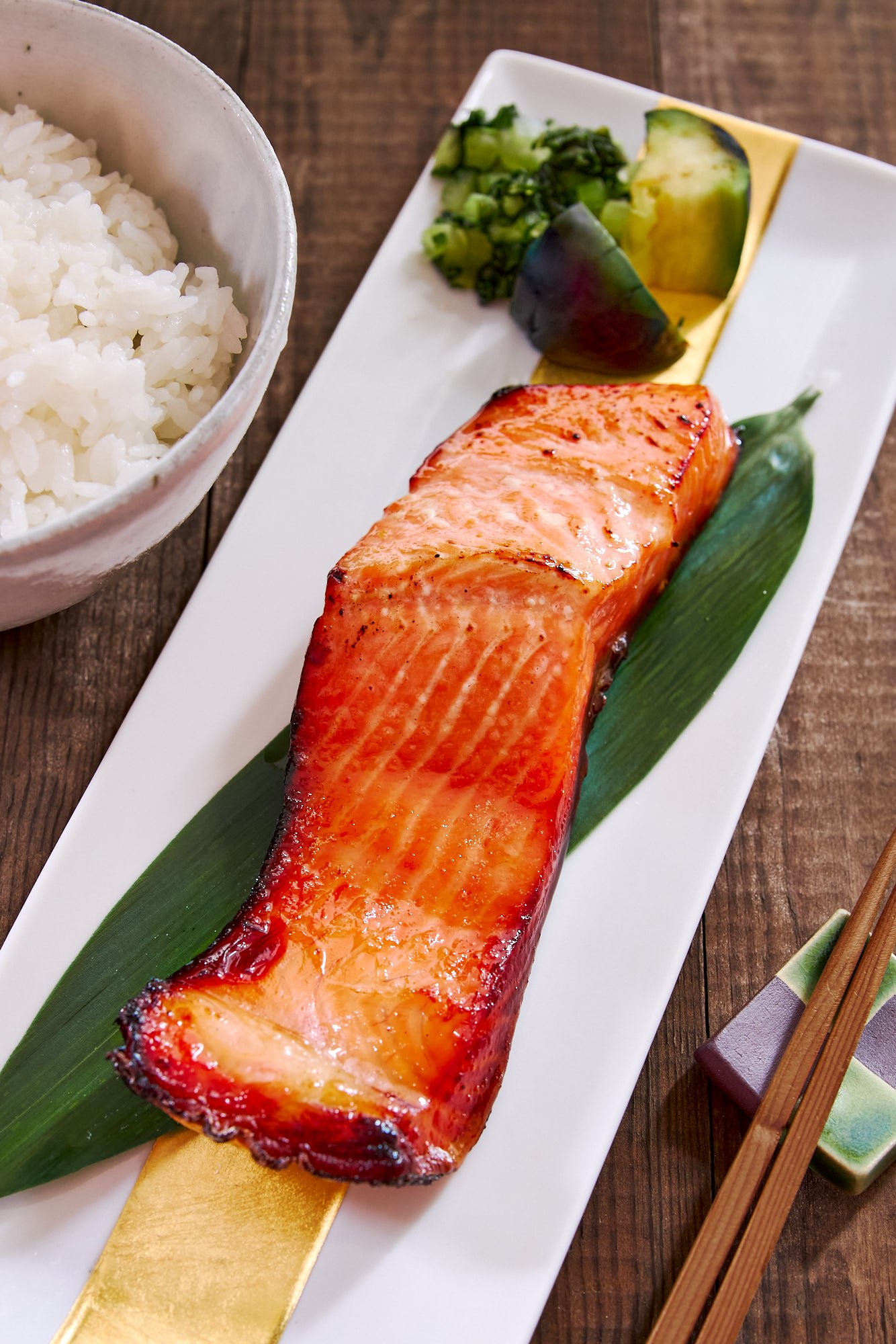
In Japan, Miso Salmon or sake no misozuke (鮭の味噌漬け) belongs to a category of dishes called misozuke , which means “pickled in miso.” It’s a traditional technique that cures fish in sweet white miso. The miso marinade seasons the fish while drawing out excess moisture, helping it stay fresh for up to a week.
You might also hear it called saikyouzuke (西京漬け), named after the pale, lightly fermented miso used around Kyoto, where this method originated about 500 years ago. Before refrigeration and high-speed trains, fish had to be preserved to survive the trip inland from Osaka’s port to Kyoto.
Even with modern refrigeration, I still love this method. It’s an easy way to prep a flavorful meal over the weekend and enjoy it throughout a busy week. Here’s my miso salmon recipe, along with all the tips you need to recreate this restaurant classic at home.
- Why My Recipe Works
- Ingredients
- How to Make Miso Salmon
- Storage & Make‑Ahead
- Serve This With
- 📖 Recipe
- Miso Salmon
- FAQs
- Comments
Why My Recipe Works
Curing salmon in miso has three main benefits:
- Preservation: Salt inhibits bacterial growth, and osmosis pulls excess moisture from the fish, helping it keep longer.
- Flavor: The miso salmon marinade infuses the fish with a savory-sweet richness packed with umami.
- Texture: The salt and enzymes in miso subtly change the structure of the proteins, giving the fish a firmer, more supple texture while keeping it moist.
Ingredients
- Salmon - I prefer using fattier fish like King Salmon (Chinook) or Atlantic Salmon for this recipe because they stay moist and juicy. That said, other types of salmon will also work if you prefer a leaner fish. You can also substitute other rich, oily fish like Sablefish (Black Cod) or Patagonian Toothfish (Chilean Sea Bass) for equally delicious results.
- Miso - There are dozens of types of miso , ranging in color from pale yellow to deep brown and nearly black. I usually reach for lighter miso when curing fish, since it’s typically fermented for a shorter time and has a milder flavor. But salmon has enough richness to stand up to darker miso as well. If you’re feeling fancy, try mixing a few varieties to create your own custom blend.
- Sake - The sake in the marinade serves two purposes. First, it thins out the miso, making it easier to spread evenly over the fish. Second, sake is rich in amino acids, which boost the umami in the marinade and add a subtle sweetness. You don’t need an expensive bottle, just choose one you’d be comfortable drinking. Avoid “cooking sake,” which is low quality and often contains additives like salt and MSG that will throw off the balance of the miso marinade. Check out my Sake for Cooking Guide to learn how to choose sake.
- Sweetener - If you’re using Saikyo miso, there’s no need to add sugar because the miso is naturally sweet. If you’re using other types of miso, you’ll need to add a sweetener to balance out the salt. While mirin is one option, real mirin can be hard to find outside Japan. That’s why I like using malted rice syrup. It’s rich in maltose, which adds a subtle sweetness and gives the miso-glazed salmon a glossy finish once grilled. Other options include honey, maple syrup, or regular white sugar.

How to Make Miso Salmon
Cure the Salmon
- Make the miso marinade by mashing together the miso, sweetener, and sake until it forms a smooth sauce.
- Lay a sheet of plastic wrap down and spread an even layer of miso on it that’s about the shape and size of your salmon.
- Lay the salmon on top of the marinade, and then drizzle the remaining marinade over it. Press out any air and wrap the salmon tightly. Place the wrapped salmon on a tray to prevent spills and refrigerate.💡 TIP: You can also divide the salmon into portions and marinate them separately.
- Let the miso marinated salmon cure in the fridge for at least 2 days (or up to 1 week). 🧪 SCIENCE: The salt and sugar in the marinade draw out water from the fish through osmosis, while infusing them with flavor. This not only seasons it, but it also helps preserve the salmon.
Unwrap and Wipe
- Before cooking, unwrap and scrape off as much of the marinade as possible. Gently pat off any excess marinade with paper towels. This prevents burning and helps the glaze caramelize instead of char.
Grilled Miso Salmon
- To grill your miso salmon in a broiler or oven, position your oven rack at the top and pre-heat to 450°F (230°C). Place a greased cooling rack over a sheet pan and pre-heat it.
- Once the rack has pre-heated, place the salmon on top and grill until it flakes easily and the surface develops a shiny, glazed appearance. 💡TIP : If any corners start to darken too fast, move the pan to a lower rack or reduce the heat.
Pan-Fried Miso Salmon
- Pre-heat a non-stick frying pan over medium-low heat and drizzle a little vegetable oil into the pan.
- Place the salmon fillets in the pan with the skin-side up, and use a spatula or tongs to gently press on the salmon to ensure even contact with the pan.
- Once the salmon has browned on one side, flip it over and then continue pan-frying it until it’s cooked through and flakes easily. If it looks like it’s browning too quickly, reduce the heat to prevent burning.
Storage & Make‑Ahead
- Cure in advance - Miso marinated salmon can be cured in the refrigerator for up to 7 days, but it’s best enjoyed freshly cooked. I recommend curing the salmon ahead of time and saving the cooking for when you’re ready to eat.You can also freeze the fish in the marinade after curing it in the fridge for 2 days. It will keep in the freezer for several months.
- Cooked leftovers - Store any cooked leftovers in an airtight container in the fridge and enjoy them within 2 to 3 days.

Serve This With
For a simple ichiju‑sansai -style Japanese meal , serve this miso-glazed salmon recipe with a bowl of fluffy Japanese short-grain rice and a steaming bowl of miso soup . To balance the richness of the salmon, add a couple of crunchy pickles like my quick asazuke cabbage or Japanese pickled cucumbers .
For side dishes, I like pairing this with greens and savory spinach ohitashi , or the nutty, toasty flavors of spinach goma-ae are both great choices. My dashi-simmered kabocha squash is another favorite. If you’re looking for more inspiration, be sure to check out my roundup of Japanese vegetable side dishes .
📖 Recipe

Equipment
Units
Ingredients1x2x3x
- 450 grams salmon (4 thin fillets)
- ¼ cup yellow miso
- ¼ cup brown rice syrup
- 2 tablespoons sake
- vegetable oil (for cooking)
Instructions
- Pat 450 grams salmon dry with a paper towel.
- In a bowl, mash together ¼ cup yellow miso , ¼ cup brown rice syrup , and 2 tablespoons sake until smooth and free of lumps.
- Lay a large sheet of plastic wrap on your work surface and spread about a quarter of the marinade into a rectangle roughly the size of two fillets.
- Place two fillets on top, then spread another quarter of the marinade over them. Repeat with the remaining two fillets on a second sheet of plastic wrap.
- Wrap each pair of fillets tightly, pressing out any excess air.
- Place the wrapped salmon on a tray and refrigerate to cure for at least 2 days, or up to 7.
- Unwrap the salmon and gently scrape off any excess marinade. Pat the fillets dry with a paper towel.
Pan-fry directions
- Heat a frying pan over medium-low and add a little vegetable oil .
- Place the salmon skin-side up in the pan and press lightly with a spatula to ensure even contact. Keep the heat moderate-the sugars in the marinade can burn quickly. Lower the heat if it browns too fast.
- Once browned on one side, flip and cook until just done.
Broiling directions
- Move your oven rack to the top position and preheat the broiler to 450°F (230°C).
- Set a cooling rack over a sheet pan and lightly grease it with an oil-soaked paper towel.
- Place the salmon skin-side down and broil until the glaze caramelizes around the edges and the fish is cooked through.
Nutrition Facts
Yes. Red miso will give a more salty and robust earthy flavor. You may want to increase the amount of sweetener if you go with red miso to compensate for the extra salt.
Two days is my sweet spot for flavor and texture, but you can go for up to a week if you want. Keep the fish refrigerated the entire time and remove excess paste before cooking to avoid scorching.
Yes. Thaw in the refrigerator until fully defrosted, pat dry, then cure. Do not marinate fish while it is still partially frozen because water released during thawing will dilute the cure.
Misozuke means “pickled in miso” and refers to curing foods in miso to season and preserve them.

Miso Salmon
Equipment
- Small Glass Bowl
- 10-inch Non-stick Frying Pan
- Turner (Spatula)
- breading tray
Ingredients
- 450 grams salmon (4 thin fillets)
- ¼ cup yellow miso
- ¼ cup brown rice syrup
- 2 tablespoons sake
- vegetable oil (for cooking)
Instructions
- Pat 450 grams salmon dry with a paper towel. 450 grams salmon
- In a bowl, mash together ¼ cup yellow miso , ¼ cup brown rice syrup , and 2 tablespoons sake until smooth and free of lumps. ¼ cup yellow miso, ¼ cup brown rice syrup, 2 tablespoons sake
- Lay a large sheet of plastic wrap on your work surface and spread about a quarter of the marinade into a rectangle roughly the size of two fillets.
- Place two fillets on top, then spread another quarter of the marinade over them. Repeat with the remaining two fillets on a second sheet of plastic wrap.
- Wrap each pair of fillets tightly, pressing out any excess air.
- Place the wrapped salmon on a tray and refrigerate to cure for at least 2 days, or up to 7.
- Unwrap the salmon and gently scrape off any excess marinade. Pat the fillets dry with a paper towel.
Pan-fry directions
- Heat a frying pan over medium-low and add a little vegetable oil . vegetable oil
- Place the salmon skin-side up in the pan and press lightly with a spatula to ensure even contact. Keep the heat moderate—the sugars in the marinade can burn quickly. Lower the heat if it browns too fast.
- Once browned on one side, flip and cook until just done.
Broiling directions
- Move your oven rack to the top position and preheat the broiler to 450°F (230°C).
- Set a cooling rack over a sheet pan and lightly grease it with an oil-soaked paper towel.
- Place the salmon skin-side down and broil until the glaze caramelizes around the edges and the fish is cooked through.
