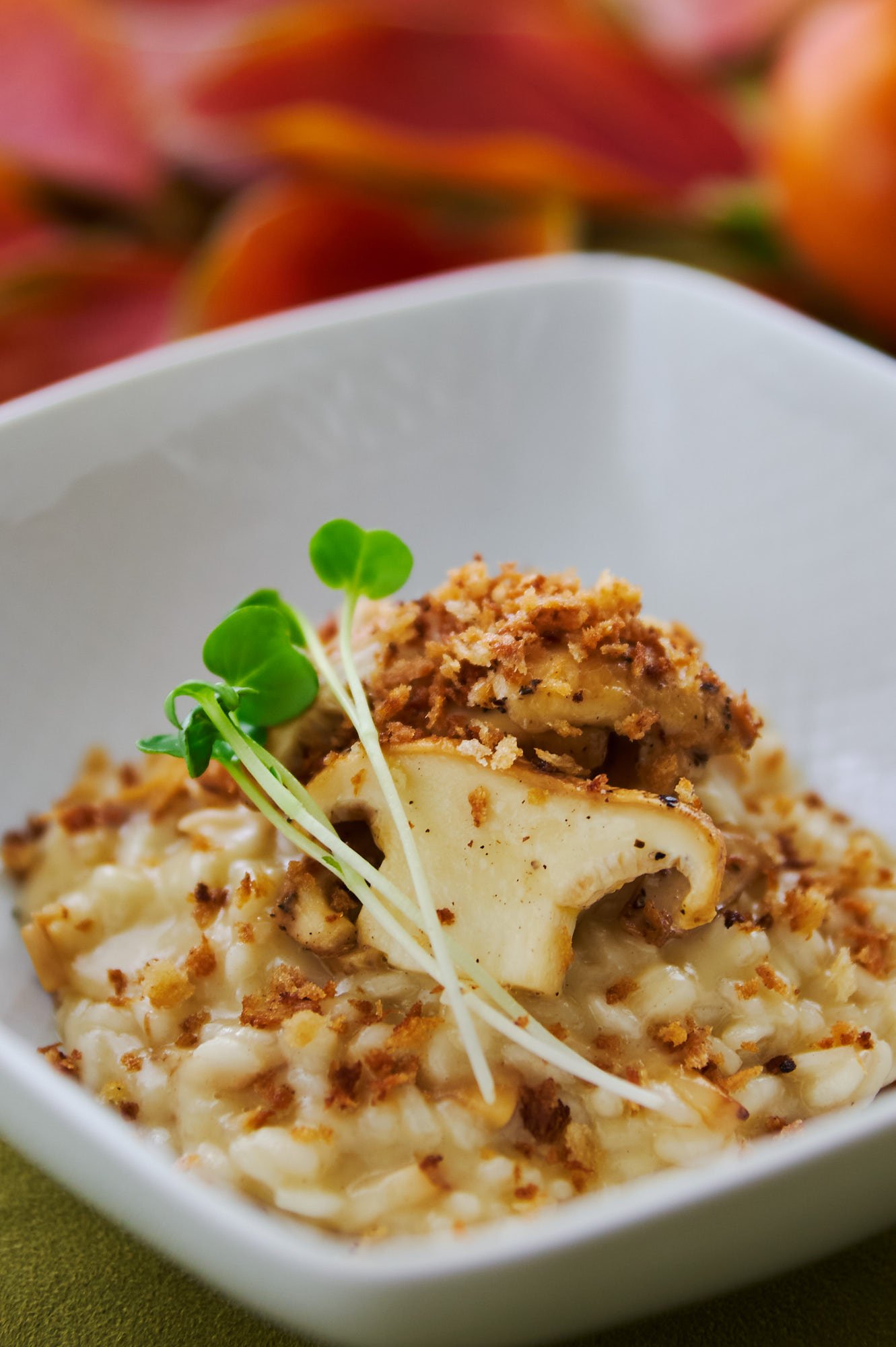
You know it’s fall when Matsutake mushrooms hit the market in Japan. Their earthy, woodsy aroma is so unique it feels like walking through a pine forest after the rain. One of my favorite matsutake recipes is this Japanese risotto that swaps sake for white wine and dashi for vegetable stock.
Autumn is rice harvest season in Japan, and it’s tradition to cook freshly harvested rice with seasonal ingredients. Matsutake rice is a classic, but this modern take pairs the sweet, nutty flavor of new rice with the deep, foresty aroma of the mushrooms, bringing out the best in both. It’s warm, savory, and deeply comforting. Here’s why this recipe works so well.
- Why My Recipe Works
- Ingredients
- How to Make Matsutake Mushroom Risotto
- What I Serve This With
- 📖 Recipe
- Comments
Why My Recipe Works
- Dashi and Wine - I like to use kombu dashi and sake as the base for this risotto. Both are rich in umami-producing glutamates, which, along with the cheese, deepen the flavor of the mushrooms without overpowering them.
- Separate the Mushrooms - Matsutake caps and stems have distinctly different textures. The stems are firmer and more fibrous, while the caps are tender and delicate. I like to chop and brown the stems before cooking them with the rice, and save the caps to sauté separately and serve on top.
- Buttered Panko Topping - Toasted panko adds a crisp, buttery contrast to the creamy risotto and brings a lovely nutty aroma that ties everything together.
Ingredients
- Matsutake Mushrooms - Unlike most mushrooms, matsutake aren’t cultivated, so they’re typically only available during a short window each autumn. While best known in Japan, they also grow in mountainous regions across Asia, Europe, and North America, so look for them in your local high-end supermarket. They may also be labeled “pine mushrooms”. If you can’t find them, other aromatic mushrooms like shiitake or porcini make great substitutes.
- Rice - Both Arborio and Carnaroli are cultivars of Japonica rice, so J apanese short-grain rice works beautifully in risotto. It holds a firm, chewy texture and doesn’t break down into mush. Any short- or medium-grain rice with a high amylopectin content will work well here.
- Kombu Dashi - Made by steeping dried kelp in cold water, kombu dashi adds loads of umami without overwhelming the mushrooms. You can also use powdered dashi or substitute a mild vegetable or mushroom stock.
- Shallots - Their gentle sweetness pairs well with the earthy mushrooms, adding depth without overpowering.
- Sake - Sake is brewed from rice, and during fermentation, enzymes break down the rice’s proteins into umami-rich amino acids. Deglazing the pan with sake boosts the savory depth of this fall risotto.
- Parmigiano Reggiano - Cheese is also rich in amino acids, and the nutty flavor of Parmigiano Reggiano complements the mushrooms beautifully.
- Panko - I like toasting Japanese panko breadcrumbs with butter to use as a crispy topping for this risotto.

How to Make Matsutake Mushroom Risotto
Preparation
- Start by warming your kombu dashi with salt. 💡 TIP: Keep the dashi hot but not boiling. This prevents the temperature of the rice from dropping suddenly as you add it.
- Separate the matsutake caps from the stems. Chop the stems and slice the caps into ~⅛" (3 mm) thick pieces. You’ll later sauté those caps separately to preserve their fragrance and texture.
Make the Mushroom Risotto
- Melt 1 tablespoon of butter along with 1 tablespoon of olive oil over medium heat. Add the minced shallots and chopped matsutake stems. Sauté until the butter becomes lightly browned and the mushrooms take on a golden hue. 🧪 SCIENCE: The Maillard reaction between amino acids and sugars at this step builds deep aromatic compounds you’ll taste later.
- Add the rice to the pan, stirring so each grain becomes coated in the fat mixture. After about a minute, pour in the ¼ cup sake and stir until it’s fully absorbed. This adds subtle sweetness and umami to the rice while dissolving any flavors that have stuck to the pan.
- Now comes the classic risotto rhythm: add two ladles of dashi and stir until it’s almost fully absorbed. Then continue adding the dashi one ladle at a time, stirring in between each addition. Keep going until the rice is just short of al dente - this generally takes about 3½ cups of dashi. Taste often and stop when the rice is creamy but firm. 💡 TIP: Stirring releases starch gradually and gives you that luscious creamy texture, so take your time, and don’t stop stirring.
Brown the Matsutake Caps & Toast Panko
- While the rice cooks, heat a second pan with the remaining olive oil. Sear the sliced matsutake caps until they develop golden edges; season lightly with salt and set aside.
- In that same pan, melt 1 tablespoon butter and use it to toast the panko breadcrumbs, stirring constantly, until golden brown and crisp. Set aside for topping.
Finish the Risotto
- Once the rice is at your desired doneness, stir in the cheese and remaining butter and emulsify the mixture. Taste and adjust salt only if needed.
- Scoop your autumn risotto into warmed bowls. Top each serving with those sautéed matsutake caps and the browned‑buttered panko crumbs.
What I Serve This With
To stick with the fall vibe, I like to build a meal around earthy flavors and seasonal ingredients. A warm, creamy bowl of kabocha squash soup is a cozy way to start. For contrast, a salad of crisp greens and sliced persimmons dressed with my Japanese sesame dressing adds a refreshing, nutty brightness.
If I’m turning it into a heartier meal, slow-braised kakuni pork belly is a rich and unctuous protein to serve alongside your Japanese risotto. Want something more luxurious? Sear an A5 wagyu steak and serve it with Japanese steak sauce for a bold, beefy protein. And for a make-ahead side that fits the season, my Japanese marinated mushrooms add a tangy, savory contrast to balance the richness of the rest of the meal.
📖 Recipe

Equipment
Units
Ingredients1x2x3x
- 4 cups dashi
- ½ teaspoon salt
- 170 grams matsutake mushrooms (thoroughly cleaned)
- 1 tablespoon cultured unsalted butter
- 1 tablespoon olive oil
- 1 tablespoon shallots (minced)
- 140 grams Japanese short grain rice (carnaroli or arborio will work too)
- ¼ cup sake
- 1 tablespoon olive oil
- 1 tablespoon cultured unsalted butter
- 2 tablespoons panko
- 14 grams parmigiano reggiano (grated)
- 1 tablespoon cultured unsalted butter
Instructions
- Add 4 cups dashi and ½ teaspoon salt to a saucepan and heat until steam begins to rise from the surface.
- Separate 170 grams matsutake mushrooms , stems from the caps. Chop the stems and slice the caps into ⅛" thick pieces
- Heat a nonstick frying pan with 1 tablespoon cultured unsalted butter and 1 tablespoon olive oil until hot. Add 1 tablespoon shallots and chopped matsutake stems. Cook until the butter browns slightly and the mushrooms take on a light golden color.
- Add 140 grams Japanese short grain rice and stir for about a minute, coating each grain with the butter and oil.
- Pour in ¼ cup sake and stir until it has evaporated. Add two ladles of dashi , stirring constantly until most of the liquid is absorbed. Continue adding dashi one ladle at a time, stirring constantly, until the rice reaches your preferred doneness (about 3 ½ cups of dashi for an al dente risotto).
- While the risotto cooks, heat a second pan with 1 tablespoon olive oil . Fry the matsutake caps until browned, then season lightly with salt and pepper. Transfer to a plate.
- Add 1 tablespoon cultured unsalted butter to the same pan, then add 2 tablespoons panko . Toast, stirring constantly, until golden brown. Transfer to a plate and set aside.
- When the risotto is done, stir in 14 grams parmigiano reggiano and 1 tablespoon cultured unsalted butter until incorporated. Taste and adjust with salt if needed. Plate the risotto and top with the sautéed matsutake caps and toasted breadcrumbs.
Nutrition Facts

Matsutake Mushroom Risotto
Equipment
- Spatula
- 10-inch Non-stick Frying Pan
Ingredients
- 4 cups dashi
- ½ teaspoon salt
- 170 grams matsutake mushrooms (thoroughly cleaned)
- 1 tablespoon cultured unsalted butter
- 1 tablespoon olive oil
- 1 tablespoon shallots (minced)
- 140 grams Japanese short grain rice (carnaroli or arborio will work too)
- ¼ cup sake
- 1 tablespoon olive oil
- 1 tablespoon cultured unsalted butter
- 2 tablespoons panko
- 14 grams parmigiano reggiano (grated)
- 1 tablespoon cultured unsalted butter
Instructions
- Add 4 cups dashi and ½ teaspoon salt to a saucepan and heat until steam begins to rise from the surface. 4 cups dashi , ½ teaspoon salt
- Separate 170 grams matsutake mushrooms , stems from the caps. Chop the stems and slice the caps into ⅛" thick pieces 170 grams matsutake mushrooms
- Heat a nonstick frying pan with 1 tablespoon cultured unsalted butter and 1 tablespoon olive oil until hot. Add 1 tablespoon shallots and chopped matsutake stems. Cook until the butter browns slightly and the mushrooms take on a light golden color. 1 tablespoon cultured unsalted butter, 1 tablespoon olive oil, 1 tablespoon shallots
- Add 140 grams Japanese short grain rice and stir for about a minute, coating each grain with the butter and oil. 140 grams Japanese short grain rice
- Pour in ¼ cup sake and stir until it has evaporated. Add two ladles of dashi , stirring constantly until most of the liquid is absorbed. Continue adding dashi one ladle at a time, stirring constantly, until the rice reaches your preferred doneness (about 3 ½ cups of dashi for an al dente risotto). ¼ cup sake
- While the risotto cooks, heat a second pan with 1 tablespoon olive oil . Fry the matsutake caps until browned, then season lightly with salt and pepper. Transfer to a plate. 1 tablespoon olive oil
- Add 1 tablespoon cultured unsalted butter to the same pan, then add 2 tablespoons panko . Toast, stirring constantly, until golden brown. Transfer to a plate and set aside. 2 tablespoons panko, 1 tablespoon cultured unsalted butter
- When the risotto is done, stir in 14 grams parmigiano reggiano and 1 tablespoon cultured unsalted butter until incorporated. Taste and adjust with salt if needed. Plate the risotto and top with the sautéed matsutake caps and toasted breadcrumbs. 14 grams parmigiano reggiano, 1 tablespoon cultured unsalted butter
