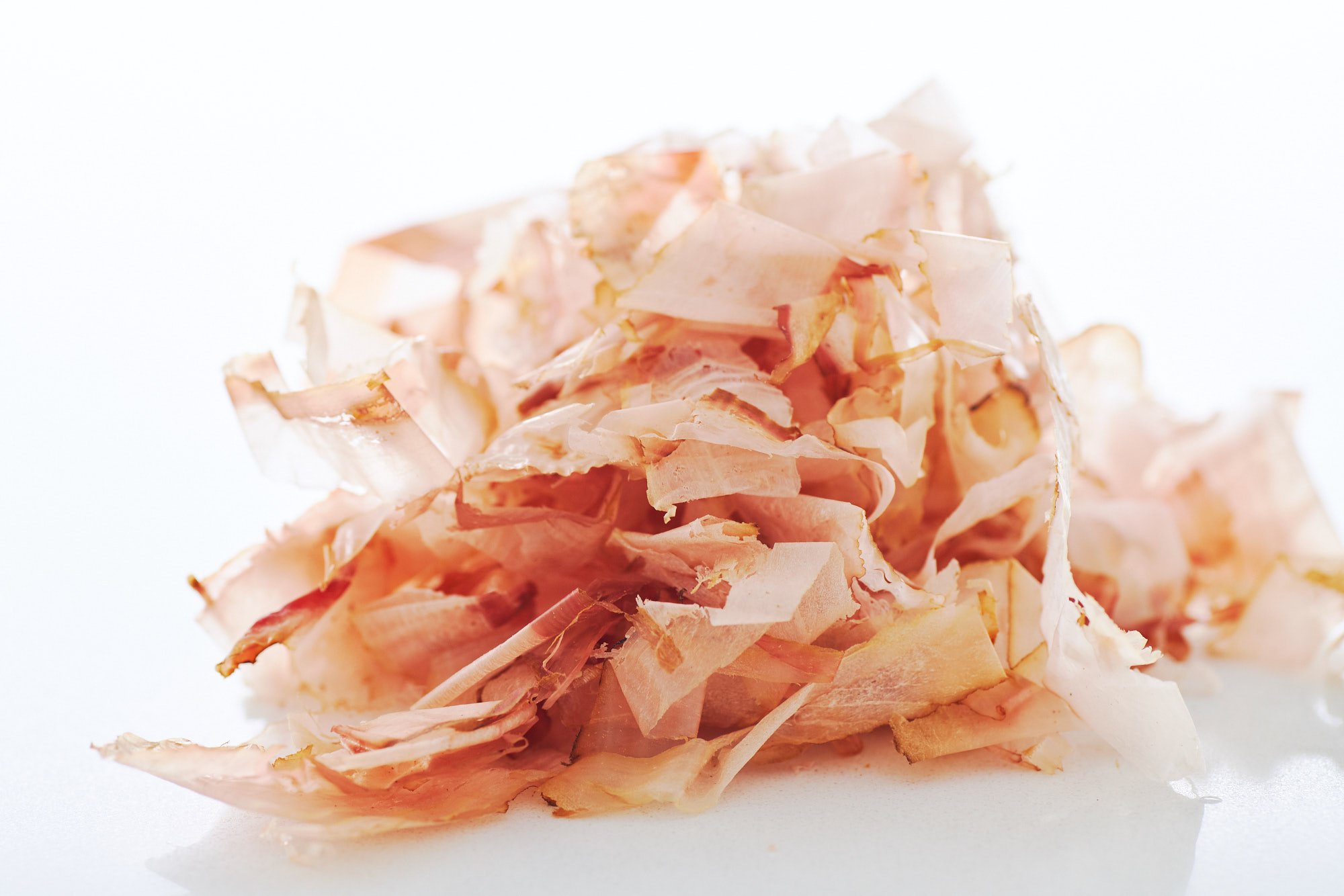
If you’ve ever taken a bite of a Japanese dish and marvelled at its rich smoky umami, chances are you were tasting katsuobushi (鰹節). These wispy flakes of dried, smoked, and fermented skipjack tuna are almost weightless, but they pack a serious amount of flavor. Broth made with katsuobushi is what makes miso soup taste like more than just salty broth, it’s what infuses a slow-cooked nimono with flavor, and what lends a simple bowl of udon noodles its smile-inducing complexity.
- What Katsuobushi Is Made From
- Why it Works
- How Katsuobushi is Made
- How I Use Katsuobushi in My Kitchen
- How to Shave Katsuobushi
- Keeping Katsuobushi Fresh
- FAQs
- Comments
What Katsuobushi Is Made From
Katsuobushi starts with katsuo (鰹), which we call skipjack tuna in English ( Katsuwonus pelamis ). It’s often labeled as “bonito” or “bonito flakes”, but this is a mistranslation that goes back decades to when these products were first imported from Japan. True bonito belongs to the genus Sarda , while skipjack is actually a member of the tuna family.
Why it Works
The magic of katsuobushi comes from inosine monophosphate , or IMP, which is a nucleotide that gives skipjack tuna its deep savory umami. I know the name sounds a little scary, but nucleotides and amino acids are building blocks of life, and we’ve evolved taste buds to seek them out. When you steep katsuobushi in water alongside kombu (which is loaded with the amino acid glutamate), something remarkable happens. The IMP and glutamic acid amplify each other, creating a level of umami that’s far greater than either ingredient could produce alone. That synergy is why a stock made with both tastes so profoundly satisfying.
How Katsuobushi is Made
Making katsuobushi takes months, sometimes years, depending on how far the producer wants to take fermentation. Each stage builds on the last, adding layers of flavor and aroma.
Cooking, Smoking, Drying
The process starts with filleting each fish into four loins: two from the back ( obushi , 雄節) and two from the belly ( mebushi , 雌節). The fillets get simmered gently to cook them through and set their shape. After cooling and deboning, the loins move into a smokehouse. Then they’re cycled between smoking over hardwood and resting periods where they cool and dry. This allows moisture to migrate out out of the fish slowly without cracking the flesh. After several weeks of this, the blocks become dense and smoky arabushi (荒節). Scrape off the tarry outer layer and you’ve got hadakabushi (裸節). Most pre-shaved katsuobushi is made using one of these two, but there are more premium grades that take it further.
Fermentation
By inoculating hadakabushi with Aspergillus, a type of filamentous fungus, premium producers ferment the blocks of katsuobushi to develop more complexity. The blocks cycle between sun-drying and fermentation, each round pulling out more moisture while mellowing the smoke and deepening the umami. Two cycles produces karebushi . Three or more creates honkarebushi (本枯節), the pinnacle of the craft, prized for its clear, elegant aroma and the refined dashi it creates.
Understanding Different Cuts and Shaving Styles
The two types of loins yield different results in your pot. Obushi comes from the back and makes lighter, cleaner dashi. Mebushi , from the belly, carries a bit more fat and produces fuller, rounder stock. Kamebushi is a smaller center cut with qualities that fall somewhere between the two.
How you shave the block matters too. Hanakatsuo (花かつお) is shaved paper thin, like delicate flower petals. This allows it to release its flavor quickly into broths and “dance” atop piping hot okonomiyaki. Atsukezuri (厚削り) are thicker shavings that take more time to steep but reward you with a deeper, more rounded stock.
How I Use Katsuobushi in My Kitchen

I use katsuobushi three ways: for making stock, as a powder, and as a garnish. For dashi, I follow the method in my tutorial on How to Make Dashi . It’s the base for everything from Miso Soup to Shoyu Ramen , and I use it for braises like Kabocha Nimono and Pork Belly Kakuni . Katsuobushi can also be steeped directly in soy sauce to make Dashi Shoyu , a seasoning I drizzle on everything from tofu to onsen tamago to quick stir-fries. Sometimes I want a more concentrated umami and more fish flavor than dashi alone can impart. That’s when I grind the flakes in a spice grinder or blender to make a fine powder. This gets added to tsukemen dipping sauce for extra body, or blended into rich sauces like my Goma Daré . As a garnish, I shower Osaka-style Okonomiyaki with a flurry of hanakatsuo right off the griddle so the flakes dance in the rising steam. It’s also beautiful on agedashi tofu , where the flakes soak up the broth and add smoky layers of flavor to the fried tofu.
How to Shave Katsuobushi
Most people these days buy convenient pre-shaved flakes that are often packaged into single serving portions. But like grinding whole spices, freshly shaved katsuobushi is unbeatable in fragrance and flavor. A katsuobushi kezuriki (鰹節削り器) works like a carpenter’s plane, turning the block of fish into fine ribbons.
Start by wiping the surface clean with a paper towel. Hold the block with the skin-side facing up, head-end against the plane’s blade, tail-end pointing away from you. Angle it between 25 and 35 degrees, then push away from yourself across the blade to create ribbons. You may need to adjust the angle as you work.
If you’re getting powder instead of flakes, your orientation is probably backwards.
Keeping Katsuobushi Fresh
Pre-shaved flakes usually come packed with nitrogen, so unopened packages keep for months in a cool, dry pantry. Once you open the bag, press out as much air as you can, seal it tight, and move it to the fridge. The aroma fades over time, so I try to use opened packages within two to four weeks. If the flakes feel damp, smell strange, or show any signs of mold, toss them. Whole blocks keep well as long as you protect them from humidity. Wrap the block snugly and store it somewhere cool. After you start shaving, move it to the fridge. You might notice a pale, dry bloom on well-aged blocks, but that’s normal. Just wipe it off before shaving. The real enemy is moisture, so avoid big temperature swings that cause condensation.
Katsuobushi is dried, smoked, and fermented skipjack tuna shaved into flakes for making dashi or finishing dishes. It’s a concentrated, portable source of savory umami.
It’s made from skipjack tuna (katsuo), not bonito. The “bonito flakes” nickname came from export markets where skipjack was sometimes called “oceanic bonito,” and the mistranslation stuck.
Keep unopened packages of katsuobushi flakes in a cool, dry pantry. After opening, press out the air, seal tightly, and refrigerate. Use within two to four weeks. For whole blocks, wrap them well and store in a cool spot, then move to the fridge once you start shaving.
