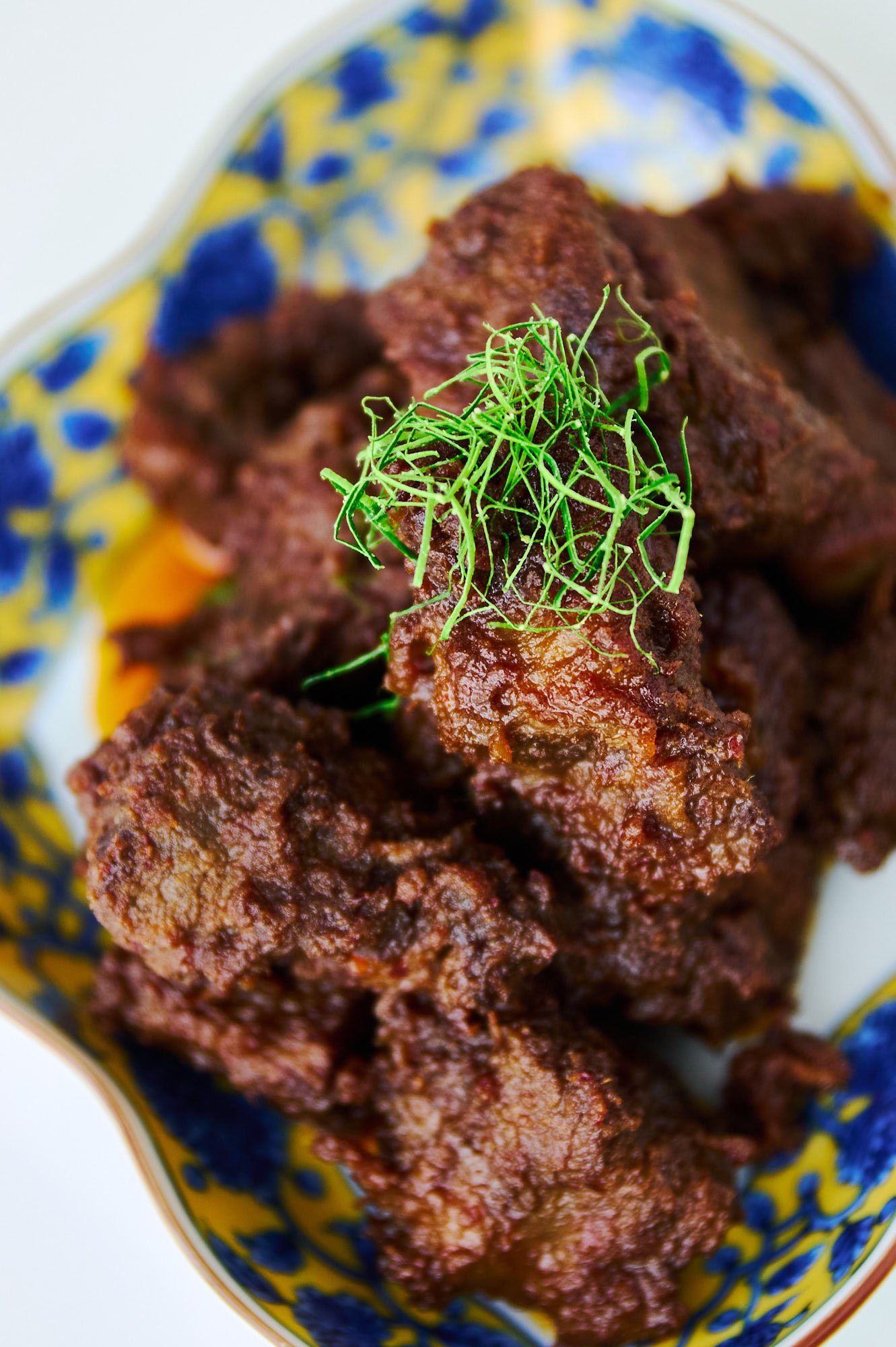
Beef Rendang is often considered the crown jewel of Indonesian cuisine, and for good reason. Its rich, complex flavors unfold in waves-bright notes of lemongrass and makrut lime leaves dance with the deep richness of caramelized beef and coconut cream while the heat of chilies urges you to go for another bite. I learned how to make this Indonesian classic during a rainy afternoon spent at a friend’s kitchen in Singapore, where we simmered, stirred, and shared stories over the enticing aroma of spices. This Beef Rendang recipe captures the essence of that afternoon, blending tradition with techniques that make it approachable for any home cook.
- Why This Recipe Works
- What is Beef Rendang?
- Difference Between Indonesian and Malaysian Rendang Beef
- Ingredients
- How to Make Beef Rendang
- 📖 Recipe
- Comments
Why This Recipe Works
- Making a homemade rendang paste from fresh aromatics and spices creates the foundation for the bold, complex flavors of authentic Rendang.
- The long cooking process slowly renders the fat and breaks down collagen into silky gelatin. This lubricates the meat, making it irresistibly tender and moist. That’s why it’s important to use a cut of beef (like chuck or beef shanks) that’s marbled with fat and connective tissue.
- Allowing the rendang curry to reduce until it starts to caramelize around the beef is the key to the nutty aromatic flavor and rich umami of Indonesian Beef Rendang.
- Letting the Rendang rest overnight gives the spices and aromatics time to meld, creating a deeper, more harmonious flavor profile.
What is Beef Rendang?
Beef Rendang is a rich and flavorful Indonesian dish that hails from the Minangkabau people of West Sumatra. Often described as a dry curry, this dish is slow-cooked in a fragrant blend of spices, coconut milk, and herbs until the liquid evaporates, leaving the beef deeply caramelized and packed with intense flavor.
Originally, Beef Rendang was more than just a delicious meal-it was a method of preservation. In an era before refrigeration, wealthy Minangkabau farmers would prepare Rendang after slaughtering a cow for special occasions. By cooking the beef in a combination of blisteringly spicy chili (thanks to capsaicin’s natural antimicrobial properties), reducing the moisture to almost nothing, and enveloping the meat in coconut fat, they created a dish that could last for weeks in Indonesia’s sweltering heat.
Difference Between Indonesian and Malaysian Rendang Beef
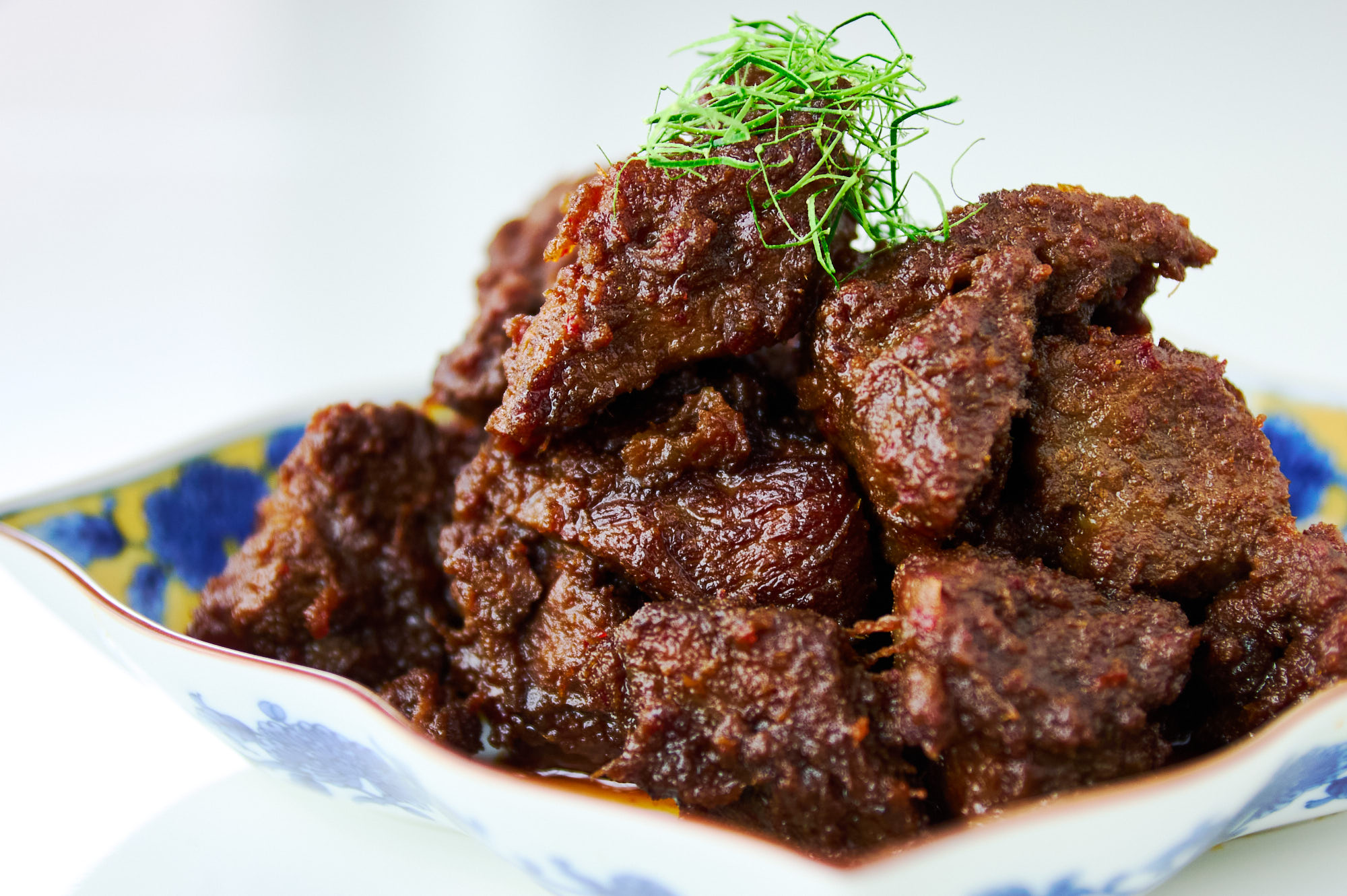
While Indonesian and Malaysian Beef Rendang recipes share a common heritage, they differ in flavor, texture, and preparation, reflecting the culinary traditions of each region. Indonesian Beef Rendang, particularly the version from West Sumatra, is typically cooked until almost all the liquid evaporates, leaving the meat dark, caramelized, and coated in a rich, concentrated paste. This “dry” Rendang emphasizes deep, nutty, and smoky flavors. On the other hand, Malaysian Beef Rendang often retains more sauce, resulting in a creamier texture. The Malaysian version tends to be milder and sweeter with a balance of flavors emphasizing coconut milk and aromatic spices like cinnamon, star anise, and cardamom.
Ingredients
Rendang Paste
The spice paste is the heart of this Beef Rendang recipe, infusing the dish with its signature layers of bold, aromatic flavors. A blend of coriander seed, turmeric, ginger, garlic, shallots, and chili flakes creates a balance of earthy warmth, zesty brightness, and fiery heat. Traditionally, these ingredients required judicious pounding with a mortar and pestle to turn them into a smooth paste. Fortunately, a food processor will make quick work of it, saving time and reducing wear and tear on your wrists.

Herbs
The addition of fresh herbs like lemongrass stalks, galangal, and makrut lime leaves (a.k.a. kaffir lime leaves) lend the curry a fragrant, citrusy brightness that perfectly complements the richness of the beef and rendang spices. You should be able to find these herbs at Southeast Asian grocery stores, and they freeze beautifully for future use-so stock up when you can!
Beef
Choosing the right cut of beef is key to making the good Rendang. Tougher cuts like beef shanks, chuck, or short ribs are ideal, as they are rich in connective tissue and fat. As the curry cooks low and slow, the collagen in these cuts breaks down into gelatin, giving the beef a tender, buttery texture that melts in your mouth. Lean cuts won’t deliver the same moist, flavorful results, so don’t skimp on the marbling.

Coconut Milk
Coconut milk balances the bold rendang spices with its creamy, velvety richness. Traditionally, it’s pressed fresh from shredded coconut, but if that’s out of reach, there’s a convenient alternative that captures the flavor of fresh coconut milk. Desiccated coconut cream powder, like the kind from Kara, is made by spray-drying fresh coconut milk, preserving its full flavor and creaminess.
How to Make Beef Rendang
To make this Beef Rendang recipe, start by preparing the rendang spice paste. Combine shallots, garlic, ginger, turmeric, ground coriander, chili flakes, and salt in a food processor and blend until smooth. This spice paste is the flavor foundation of this dish, so make sure there are no clumps-it should be creamy and fragrant. If the paste feels too thick or dry, add a tablespoon of water to help it along.
Next, heat a heavy-bottomed pot over medium-high heat and add some vegetable oil. Sear the beef pieces in batches until each side is beautifully browned. Browning is a crucial step-Maillard browning enhances the savory depth of the beef by developing complex, caramelized flavors. Avoid overcrowding the pan, as this traps steam and prevents proper browning. Once browned, set the beef aside.
Using the same pot, fry the smashed lemongrass stalks, kaffir lime leaves, and galangal in the remaining oil until their aromas fill your kitchen. Turn the heat down to medium-low and add the spice paste. Fry it while stirring constantly to prevent sticking or burning. If the mixture starts to scorch, lower the heat and add a splash of water to keep it from burning.
Prepare the coconut milk by rehydrating coconut cream powder in warm water, or use canned coconut milk if that’s what you have on hand. Stir the coconut milk into the pot along with a bit of palm sugar for balance. Return the beef to the pot and bring everything to a gentle simmer. Cover the pot loosely to allow steam to escape, and cook on low heat for several hours. Stir occasionally to ensure nothing sticks to the bottom and to evenly coat the beef in the rich curry sauce.

As the curry simmers, the liquid will gradually reduce, thickening the sauce and concentrating its flavors. After about three to four hours, the sauce will have nearly evaporated, leaving the beef coated in a dark, caramelized paste. At this stage, increase the heat slightly to fry the remaining sauce in the rendered oil, further intensifying the dish’s flavor. Keep stirring to avoid burning, and stop when the beef is richly browned and the sauce clings to it like a glaze.
For the best results, let the beef rendang rest overnight in the fridge before serving. This allows the flavors to meld and deepen, creating an even more flavorful dish. When stored properly, the low moisture content of this dish makes it perfect for reheating and enjoying with steamed rice over several days-just as it was originally intended.
By the way, if you don’t have the time to make this version of Rendang, I’ve developed a faster Chicken Rendang recipe that comes together in about an hour and still delivers a wallop of flavor.
📖 Recipe

Equipment
Units
Ingredients1x2x3x
For the spice paste
- 1 teaspoon salt
- 1 teaspoon ground coriander seed
- ¼ teaspoon ground turmeric
- 2.5 centimeters fresh ginger (roughly chopped)
- 25 grams garlic (roughly chopped)
- 200 grams shallots (4 large roughly chopped)
- 3 tablespoons chili pepper flakes (to taste)
For cooking the Rendang
- 2 tablespoons vegetable oil
- 900 grams beef shanks or shortribs (cut into large cubes)
- 2 stalks lemongrass (white part only, smashed)
- 4 kaffir lime leaves (or 1 teaspoon Makrut lime zest)
- 2.5 centimeters galangal (sliced into coins)
- 2 packs coconut cream powder (or 1 can coconut milk)
- 1 tablespoon coconut sugar (brown sugar or palm sugar can be substituted)
Instructions
- Add all the 1 teaspoon salt , 1 teaspoon ground coriander seed , ¼ teaspoon ground turmeric , 2.5 centimeters fresh ginger , 25 grams garlic , 200 grams shallots , and 3 tablespoons chili pepper flakes to a food processor and run until there are no clumps left and you have a smooth spice paste. You’ll need to scape the bowl down a few times. It’s possible to double the recipe and freeze half for another time.
- Add the 2 tablespoons vegetable oil to a heavy bottomed pot and heat over medium high heat until shimmering. Fry the 900 grams beef shanks in batches, allowing each surface to brown before turning. Transfer the browned beef to a bowl and repeat with the remaining meat.
- Smash 2 stalks lemongrass and add them to the pot along with 4 kaffir lime leaves , and 2.5 centimeters galangal to the hot oil and fry until fragrant. Transfer to the bowl with the browned beef, leaving the oil in the pot.
- Turn the heat down to medium-low, and then add the spice paste ingredients. Fry, stirring constantly until very fragrant and most of the moisture has evaporated (about 10-15 minutes). If the paste starts burning, reduce the heat and add a bit of water.
- Rehydrate the 2 packs coconut cream powder in 2 cups of water and then add it to the pot along with the 1 tablespoon coconut sugar . Return the beef and herbs to the pot and stir to combine.
- Turn the heat down to medium-low and loosely cover it with a lid (you want some steam to escape). Stir the Rendang periodically and simmer for 3-4 hours until the meat is very tender. You can speed this process up by cooking in a pressure cooker for 45 minutes.
- Once the meat is tender and most of the liquid has evaporated (about 4 hours), remove the lid and turn up the heat. At this point, there should be quite a bit of oil in the pot from the meat, so you’re essentially frying the sauce and concentrating the flavors. You’ll need to stir the mixture constantly to prevent it from burning, but you want to evaporate as much liquid as you can without burning the meat. Keep in mind that oil does not evaporate during cooking, so you will still have a bit of oil at the bottom of the pan.
- The rendang beef is done when almost no sauce is left and the meat is dark brown. Ideally, you’ll let this sit overnight for the flavors to evenly distribute into the meat. During this time, the meat will turn chocolate-colored, and the flavors will deepen. Serve the beef rendang with steamed rice.
Nutrition Facts

Beef Rendang
Equipment
- 1 Large Dutch Oven
- 1 Food Processor
Ingredients
For the spice paste
- 1 teaspoon salt
- 1 teaspoon ground coriander seed
- ¼ teaspoon ground turmeric
- 2.5 centimeters fresh ginger (roughly chopped)
- 25 grams garlic (roughly chopped)
- 200 grams shallots (4 large roughly chopped)
- 3 tablespoons chili pepper flakes (to taste)
For cooking the Rendang
- 2 tablespoons vegetable oil
- 900 grams beef shanks or shortribs (cut into large cubes)
- 2 stalks lemongrass (white part only, smashed)
- 4 kaffir lime leaves (or 1 teaspoon Makrut lime zest)
- 2.5 centimeters galangal (sliced into coins)
- 2 packs coconut cream powder (or 1 can coconut milk)
- 1 tablespoon coconut sugar (brown sugar or palm sugar can be substituted)
Instructions
- Add all the 1 teaspoon salt , 1 teaspoon ground coriander seed , ¼ teaspoon ground turmeric , 2.5 centimeters fresh ginger , 25 grams garlic , 200 grams shallots , and 3 tablespoons chili pepper flakes to a food processor and run until there are no clumps left and you have a smooth spice paste. You’ll need to scape the bowl down a few times. It’s possible to double the recipe and freeze half for another time. 1 teaspoon salt, 1 teaspoon ground coriander seed, ¼ teaspoon ground turmeric, 2.5 centimeters fresh ginger, 25 grams garlic, 200 grams shallots, 3 tablespoons chili pepper flakes
- Add the 2 tablespoons vegetable oil to a heavy bottomed pot and heat over medium high heat until shimmering. Fry the 900 grams beef shanks in batches, allowing each surface to brown before turning. Transfer the browned beef to a bowl and repeat with the remaining meat. 2 tablespoons vegetable oil, 900 grams beef shanks
- Smash 2 stalks lemongrass and add them to the pot along with 4 kaffir lime leaves , and 2.5 centimeters galangal to the hot oil and fry until fragrant. Transfer to the bowl with the browned beef, leaving the oil in the pot. 2 stalks lemongrass, 4 kaffir lime leaves, 2.5 centimeters galangal
- Turn the heat down to medium-low, and then add the spice paste ingredients. Fry, stirring constantly until very fragrant and most of the moisture has evaporated (about 10-15 minutes). If the paste starts burning, reduce the heat and add a bit of water.
- Rehydrate the 2 packs coconut cream powder in 2 cups of water and then add it to the pot along with the 1 tablespoon coconut sugar . Return the beef and herbs to the pot and stir to combine. 2 packs coconut cream powder, 1 tablespoon coconut sugar
- Turn the heat down to medium-low and loosely cover it with a lid (you want some steam to escape). Stir the Rendang periodically and simmer for 3-4 hours until the meat is very tender. You can speed this process up by cooking in a pressure cooker for 45 minutes.
- Once the meat is tender and most of the liquid has evaporated (about 4 hours), remove the lid and turn up the heat. At this point, there should be quite a bit of oil in the pot from the meat, so you’re essentially frying the sauce and concentrating the flavors. You’ll need to stir the mixture constantly to prevent it from burning, but you want to evaporate as much liquid as you can without burning the meat. Keep in mind that oil does not evaporate during cooking, so you will still have a bit of oil at the bottom of the pan.
- The rendang beef is done when almost no sauce is left and the meat is dark brown. Ideally, you’ll let this sit overnight for the flavors to evenly distribute into the meat. During this time, the meat will turn chocolate-colored, and the flavors will deepen. Serve the beef rendang with steamed rice.
